Performance against our strategy
The table below shows FMO's SDG contributions by strategic sector
|
Indicators |
SDG |
2024 |
2025 |
AFF |
EN |
FI |
Diverse sectors |
|---|---|---|---|---|---|---|---|
|
Total committed portfolio*, of which: |
|
15,472 |
15,312 |
2,399 |
3,498 |
7,546 |
1,869 |
|
FMO |
10,516 |
10,500 |
1,331 |
2,591 |
5,046 |
1,532 |
|
|
Public funds |
1,566 |
1,380 |
315 |
309 |
419 |
337 |
|
|
Direct mobilized funds |
3,390 |
3,432 |
753 |
598 |
2,081 |
0 |
|
|
Total new investments*, of which: |
3,826 |
3,940 |
770 |
694 |
2,352 |
124 |
|
|
FMO |
2,188 |
2,677 |
451 |
523 |
1,582 |
121 |
|
|
Public funds |
285 |
229 |
67 |
53 |
106 |
3 |
|
|
Direct mobilized funds |
1,353 |
1,034 |
252 |
118 |
664 |
0 |
|
|
Total number of jobs supported (in thousands), of which: |
889 |
894 |
165 |
107 |
546 |
76 |
|
|
Direct jobs |
83 |
91 |
38 |
12 |
19 |
22 |
|
|
Indirect jobs** |
806 |
803 |
127 |
95 |
527 |
54 |
|
|
RI-labelled total committed portfolio |
|
6,092 |
6,661 |
1,415 |
1,069 |
3,857 |
320 |
|
RI-labelled total new investments |
2,250 |
2,231 |
572 |
208 |
1,359 |
92 |
|
|
Green-labelled total committed portfolio |
|
5,876 |
6,166 |
892 |
3,076 |
1,763 |
435 |
|
Green-labelled total new investments |
1,460 |
1,761 |
337 |
652 |
689 |
83 |
|
|
Total financed avoided greenhouse gas emissions*** (ktCO₂e) |
1,959 |
2,028 |
77 |
1,821 |
0 |
130 |
|
|
Total financed absolute greenhouse gas emissions (ktCO₂e), of which: |
5,853 |
6,435 |
1,123 |
747 |
3,897 |
668 |
|
|
Scope 1 +2 |
1,378 |
1,162 |
325 |
447 |
122 |
268 |
|
|
Scope 3 |
4,475 |
5,273 |
798 |
300 |
3,775 |
400 |
|
|
ESG target performance (%) |
|
94% |
95% |
94% |
95% |
93% |
98% |
We invest with the goal of contributing to positive economic, social and climate impact in the markets we serve. To meet the diverse financing needs of our customers, we deploy a range of financial instruments, selecting the most appropriate instrument and structure based on each company’s business model, risk profile, and stage of development.
FMO’s activities are financed through three main sources: our own balance sheet, public funds (government and other public funding programs we manage), and direct mobilized funds (capital mobilized from public and private co-investors). Public funds enable FMO to invest in higher-risk markets and sectors, in line with the specific objectives agreed with funding partners. Through mobilization, we attract additional capital to scale investments and broaden our impact. Our own balance sheet remains the core source of financing across sectors and products. The investments and impact figures presented in this chapter reflect the combined contribution of these funding sources. Consequently, not all investments are financed directly by FMO, and the related risks may be shared with or fully borne by the funding partners, as applicable.
Our direct investments consist of debt, equity, and guarantee instruments provided to companies and financial institutions in our focus sectors: Agribusiness, Food & Forestry (AFF), Energy (EN), and Financial Institutions (FI). We also make indirect investments through private equity and venture capital funds (which are discussed further in the section 'Private equity funds and venture capital').
Beyond investment, we deploy development contributions, including grants and technical assistance, and implement market creation interventions. These activities are aimed at reducing risks, strengthening capacity, and scaling impact at our customers or in the ecosystems and markets they operate.
We aim to create customer value by supporting our customers to reach their financial and non-financial objectives. This is achieved through our activities, namely the provision of investment and, importantly, financial and non-financial advisory services, development contributions, or inherent contributions.17
The performance of these activities is reflected in our total committed portfolio and total new investments, which together capture the scale and composition of our financing across products, sectors, and regions. We also report on the number of direct and indirect jobs supported through our customers’ activities and on our avoided greenhouse gas (GHG) emissions. Definitions of these metrics is included in the ‘Alternative Performance Measures’ chapter. Throughout this chapter, we complement portfolio-level results with case studies that illustrate our investments, technical assistance, and the value we help create for customers.
While this chapter highlights areas where we currently track and report progress, it does not capture all of FMO’s long-term strategic ambitions, as some initiatives are still under development or not yet part of our external reporting.
We start by looking at FMO’s total committed portfolio and total new investments performance focussing on our strategic impact ambitions. Thereafter we report on the performance of our focus sectors. Finally, we will have a look at private equity funds and venture capital, market creation and organizational developments.
Portfolio composition & performance drivers
Total committed portfolio (in € mln)


Our total committed portfolio declined to €15.3 billion in 2025 (2024: €15.5 billion) consisting of €10.9 billion in debt products, €4 billion in equity investments and €0.3 billion in guarantees. Of this total, €10.5 billion was invested through FMO’s own funds (2024: €10.5 billion) and €1.4 billion through public funds (2024: €1.6 billion). Our direct mobilized committed portfolio amounted to €3.4 billion (2024: €3.4 billion). More than half of this amount (€2.0 billion) was mobilized from commercial investors—primarily through syndications, private debt funds advised by FMO Investment Management (FMO IM) and unfunded risk participations with other commercial parties.
In 2025, the US dollar (US$) depreciated by 13 percent against major currencies. Given that around 77 percent of FMO’s portfolio is denominated in US$, this depreciation had a significant adverse impact on the portfolio results that are reported in euros. It is important to note that the decline in euro value does not indicate a weakening of the portfolio itself but is primarily an accounting conversion effect.
Total committed portfolio development in US$ and € (in mln)

Taking a longer-term view, the portfolio has grown by 26 percent in US$ terms (or 16 percent in euro terms) since 2022, the year we launched our current Strategy 2030. While recent currency volatility has somewhat obscured this positive trajectory, the portfolio’s structural growth since 2022 demonstrates continued demand for FMO’s financing and our ability to serve customers across market cycles.
In addition, we noted a significant increase in early repayments in our balance sheet portfolio on top of our scheduled repayments. These were potentially triggered by the weakening of the US dollar, as well as the interest rate cuts by the European Central Bank (ECB) and US Federal Reserve throughout 2025. Although FMO’s new investments performed robustly throughout the year (detailed below), the volume was insufficient to fully offset the negative effects of the exchange rate movement and higher early repayments on our total committed portfolio results.
While the weaker dollar reduced the value of our portfolio when converted to euros, it also lowered the amount of risk we carry in euro terms. This had a positive effect on our regulatory capital ratio. More details on this can be found in the ‘Risk Management’ chapter.
Total new investments (in € mln)


Despite entering the year with considerable uncertainties arising from increasing tariffs, geopolitical instability, and policy shifts in major economies, we achieved a 3 percent growth in total new investment volume compared to 2024. On the demand side, our customers demonstrated resilience amid these turbulent conditions, taking advantage of easing global inflationary pressures, the aforementioned interest rate cuts by central banks to stimulate growth, and a weakening US dollar. These factors improved liquidity conditions for many businesses in emerging markets.
On the supply side, FMO continued to apply its high standards to selecting and assessing new opportunities, resulting in a healthy pipeline and strong execution across our portfolio. Investments in the FI sector were instrumental in driving our robust performance throughout 2025. Furthermore, investment volumes in the Energy sector increased compared to the prior year.
Mobilization of third-party capital continued to exceed expectations, further contributing to our positive results. In 2025, mobilization was again particularly prevalent in our FI portfolio. We also mobilized capital for transactions with other customers whose risk and return profiles align well with those of private investors, further driving performance. Beyond private capital, we also attract public co-investors, mainly other development finance institutions (DFIs), which contributes to a more efficient development finance ecosystem. In 2025, €500 million was mobilized publicly and €534 million privately.
RI-labelled total committed portfolio
(in € mln)

Green-labelled total committed portfolio
(in € mln)

We are pleased to report robust portfolio performance in alignment with SDG 10’s ambition to reduce inequalities within and among countries. This is an important achievement in light of persistent income inequality. Our Reducing Inequalities- (RI-) labelled portfolio increased by 9 percent. Although this represents a modest increase, the growth is noteworthy given the market volatility and the overall decline in total portfolio figures. Growth was primarily driven by increased investments supporting inclusive business models through financial institutions.
Geographically, 55 percent of the RI-labelled portfolio is located in Africa and Asia, reflecting our focus on regions with the most acute structural inequalities and financing gaps. This enables our capital to contribute more meaningfully to reducing inequalities.
Our Green-labelled portfolio grew by €290 million in 2025, or 5 percent compared to year-end 2024, driven by a significant increase in new investments compared to 2024. The largest share of our Green-labelled portfolio remains concentrated in the Energy sector, reflecting both the maturity of renewable energy markets and the sector’s ability to generate high-volume transactions with clear and measurable climate-mitigation impacts.
Two regions accounted for the largest proportion (55 percent) of the exposure of our Green-labelled portfolio: Latin America & the Caribbean, and Africa. This concentration is strategically important: both regions face severe climate vulnerability and have significant needs for sustainable energy investments. Directing green finance toward these markets strengthens energy security, supports the transition away from costly fossil fuel imports, and delivers high development impact particularly in lower-income countries where access to finance remains limited.
RI-labelled total new investments
(in € mln)

Green-labelled total new investments
(in € mln)

In 2025, RI-labelled investments amounted to €2.2 billion (2024: €2.3 billion). The FI sector accounted for the largest absolute contribution, with €1.4 billion invested to support SDG 10. As a share of its portfolio, the AFF sector had the highest level of RI-labelled investment, with 74 percent of its total invested amounts aligned with SDG 10 objectives. The Energy sector also expanded its reach to more customers through gender-responsive solutions, helping to maintain strong RI results.
Investments in least developed countries (LDCs), which fall under our RI label, increased to €433 million up from €349 million in 2024. We are delighted to see that our LDC Action Plan, adopted in 2024, is gaining traction. Over the past year, we have worked on removing internal constraints to investing in LDCs, while also contributing to a better understanding of the market barriers that continue to limit financial flows to these countries, along with solutions to help reduce these barriers.
The FI sector in particular stepped up its engagement, doubling new investments in LDCs to €217 million in 2025 compared to €108 million in 2024. The Energy sector also made a substantial contribution, investing €147 million with a focus on captive power solutions for mining and grid expansion in countries such as Zambia, Mozambique and Uganda. In the AFF sector, we invested in a large agricultural commodities trader specializing in sesame and cashew nuts, sourcing primarily from East and West Africa.
Green-labelled new investments – including renewable energy projects, green credit lines, and sustainable agriculture – amounted to €1.8 billion, a 21 percent increase from 2024. This was mainly due to increasing investments in financial institutions with a focus on green credit lines, such as for QNB in Türkiye, and JSICB Ipak Yuli Bank in Uzbekistan. The Energy portfolio maintained a high Green-labelled share, with 94 percent of all new investments supporting SDG 13 ambitions.
Agribusiness, Food & Forestry
Despite a turbulent global backdrop, FMO’s AFF portfolio delivered resilient performance with high development impact in 2025. This was supported by the decision to further diversify the portfolio by expanding exposure to larger, often regional customers. These customers typically uphold stronger corporate governance standards and operate across diversified business lines, giving them greater capacity to respond to external pressures as supply chain disruptions become the new normal.
While many of our customers showed resilience, global food security conditions deteriorated in 2025, with rising food insecurity and child malnutrition. Despite easing staple food prices, prolonged conflicts, such as those in Gaza, Sudan, Ukraine, and Yemen, remained key drivers. At the same time, challenging economic conditions, including high local inflation in several markets, currency devaluation, and weak institutions, contributed to persistent food shortages, particularly in least developed and fragile states.
More frequent adverse weather events and a sharp decline in ODA funding further compounded these challenges, underscoring the urgent need to channel affordable financing to the countries most in need.
Overall sector performance
Total committed portfolio in AFF (in € mln)


Total new investments in AFF (in € mln)


The AFF total committed portfolio remained largely stable in 2025, despite foreign exchange (FX) developments and the volatile market environment. Total new investments remained slightly below last year’s level. Green-labelled investments increased modestly, while RI-labelled investments were slightly lower than in 2024.
In terms of geographical spread, the share of investments in global companies in our portfolio has increased considerably since 2024, compared to regional and local businesses, reflecting a targeted shift to diversify our client base and balance risk. Many of these companies operate in or source from emerging markets connecting local farmers, processors, and agribusiness SMEs to regional and global value chains. This allows us to reach smaller actors at scale. At the same time, we increased new investments with public funds in 2025, through which we finance higher risk, highly impactful projects often in more fragile economies or nascent sectors.
While FMO remains more transformational at the earlier and riskier investment stages in higher-risk markets, working with larger companies with diversified operations supports stable performance and helps crowd in private capital. In 2025, we mobilized €77 million in private capital, primarily alongside companies with more stable risk and return profiles.
Nonetheless, many investors still perceive agribusiness in emerging markets as high risk. To address this, we also work closely with public partners, including other DFIs and impact investors. Through these partnerships, we mobilized an additional €175 million for projects not yet suitable for commercial financing.
Due in part to delays in closing new investments, particularly in Africa, the total level of new investments declined slightly compared to last year. Key challenges included governance issues and company readiness, especially in LDCs and fragile markets, where investments often require public funding support and technical assistance. In total, we invested €451 million through our own balance sheet, €67 million through public funds and €252 through direct mobilized funds. Of these, 85 percent were debt, while 11 percent were equity products.
Contribution to FMO's strategic impact ambitions
Agribusiness, Food & Forestry and SDG 8
Jobs supported (in thousands)
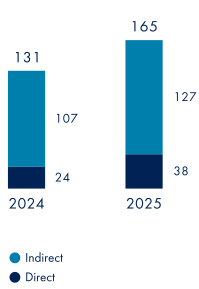
The AFF portfolio played a critical role in advancing our goals for SDG 8 in 2025, supporting 38,000 direct jobs, up from 24,000 in 2024. This growth is partly driven by new investments in labor-intensive customers. An estimated 44 percent of these direct jobs were held by women. Additionally, we supported an estimated 127,000 indirect jobs, primarily generated through supply chain activities and salary spending. By providing financing to commodity off-takers and processors that source from a large number of smallholder farmers across Africa, Asia, and Latin America & the Caribbean, we indirectly boost incomes for people at the base of the income pyramid. For example, our support to a cashew and sesame processor in West Africa, and to a Vietnam-based coffee exporter, enabled these companies to increase sourcing from small farmers, lifting earnings in rural communities.
Robust International Pte Ltd
Multinational agri-commodity processor and importer-exporter across Africa
US$15 million debt | FMO | SDG 8, 10

Robust International is a major trader and processor of cashew and sesame, sourcing 95 percent of its raw materials from various countries in East and West Africa. Robust conducts early-stage processing operations to serve markets worldwide and is currently transforming from a traditional merchant to an end-to-end integrated supply chain company with new facilities in Burkina Faso, Mozambique, and Ivory Coast. Through its supply chain, Robust works with over 30,000 smallholder farmers, many in underserved rural communities, where it offers technical assistance and access to digital tools. In 2024, FMO acted as Mandated Lead Arranger for a working capital facility of up to US$105 million alongside various impact investors including BII, Proparco, and ILX. In 2025, two more DFIs, Impact Fund Denmark and OeEB, joined FMO’s syndicated facility, and with a US$15 million contribution from FMO, the facility grew to a total of US$175 million. This will serve not only to enhance Robust’s processing capabilities, but to also create substantial economic opportunities for farmers, with the expectation of creating an additional 2,000 direct jobs by 2026, the majority for women.
Agribusiness, Food & Forestry and SDG 10
RI-labelled total committed portfolio in AFF
(in € mln)

RI-labelled total new investments in AFF
(in € mln)

The RI-labelled share of the AFF portfolio made a strong contribution to FMO’s goals of fostering inclusive development in 2025. Our committed portfolio aimed at reducing inequalities amounted to €1.4 billion at the end of 2025, compared to €1.2 billion in 2024, despite volatile market conditions and the depreciating US dollar. Over half (59 percent) of the portfolio received an RI label, largely as a result of our investments supporting smallholder farmers either directly or indirectly through global traders, off-takers, and food processors.
We also increased our focus on inclusive development in new investments, with 74 percent of the new investments receiving an RI label in 2025. A portion of these investments aim to support smallholder farmers in origin markets and enhance rural livelihoods, while others aim to reach women-owned businesses or cooperatives. FMO’s globally active customers sourcing from local small suppliers in Africa and Asia helped drive this increase. In addition, FMO helped customers create gender action plans to empower women farmers and employees, thereby supporting existing businesses within our portfolio to strengthen their inclusivity and create value.
Geographically, we strive to prioritize countries where access to financial services is most limited, especially in LDCs and fragile states. In 2025, we invested €69 million in LDCs. While originating investments in these countries remains challenging, FMO maintains a strong focus on these markets and supporting inclusive development where needs are greatest.
GH2 Industries (Private) Limited
Agri-based manufacturing facility in Pakistan
US$10 million debt | Building Prospects, Land Use Facility | SDG 8, 13

GH2 is a pioneering greenfield project in Sindh, Pakistan, transforming broken rice (rice grains fractured during milling) and other by-products into high-value ingredients such as sorbitol, dextrose, rice protein and sodium silicate. As a large producer of rice-based products, the project operates on circular economy principles, targeting net-negative carbon emissions while enhancing agricultural productivity and strengthening farmer livelihoods. Located in a climate-vulnerable region, GH2 integrates climate-smart agriculture to improve resilience against floods, droughts, and salinity risks, while reducing methane emissions from rice paddies by up to 40 percent and advancing net-negative GHG emissions ambitions. FMO supported the project through a US$5 million investment via the Dutch Fund for Climate & Development and a US$5 million investment through the Building Prospects fund (managed by FMO). The overall US$55 million blended finance structure demonstrates strong additionality, with FMO’s participation mobilizing further investment and enabling an innovative circular economy model. The project contributes to Pakistan’s economic development by strengthening export capacity, creating employment, and enhancing food system resilience. It is also expected to deliver meaningful climate and social impact by directly supporting approximately 3,000 smallholder farmers through inclusive sourcing models and agronomic training focused on water efficiency, soil health, and gender-responsive business practices.
Agribusiness, Food & Forestry and SDG 13
Green-labelled total committed portfolio
in AFF (in € mln)

Green-labelled total new investments
in AFF (in € mln)

As part of our SDG 13 focus, we explored new climate action avenues in 2025, such as investing in climate-smart opportunities and climate adaptations. For example, we partnered with the CASA technical assistance facility to support drought-resilience of smallholder farmers and strengthen green and inclusive agribusiness models in low-income countries.
More than one-third (37 percent) of our committed portfolio in AFF now contributes to FMO’s climate action objectives (SDG 13) and carries a Green label. In total, new Green-labelled investments reached €337 million, representing a 14 percent increase compared to 2024.
Additionally, through our forestry initiatives we contribute to climate mitigation and biodiversity, supporting projects that combine conservation, carbon sequestration, and sustainable livelihoods. Forestry and nature-based solutions still represent an emerging investment market, and FMO and similar parties play a key role in de-risking and demonstrating the viability of new ventures. We expect to see growth in this area as market fundamentals for (industrial) wood fiber remain compelling, driven by a growing demand for sustainable raw materials. While these still represent just a small portion of FMO’s AFF portfolio, we continued our engagement in these markets during the year. We invested in York Timber, a South African forestry company, and supported Miro Forestry through the Sustainable Land Fund, laying the groundwork for reforestation and sustainable timber projects.
Responsible Commodities Facility
Sustainable soy production initiative in Brazil’s Cerrado
US$10 million debt | Mobilising Finance for Forests | SDG 13

The Responsible Commodities Facility (RCF) promotes the production of responsibly produced soy in Brazil’s Cerrado biome by providing lower-interest credit lines as a financial incentive to farmers who commit to zero deforestation (legal and illegal) and no conversion of native vegetation. Short-term crop financing in the form of a one-year working capital loan is offered to farmers, enabling them to purchase inputs during the pre-harvest season and repay the debt at season-end. FMO supported this facility with a US$10 million investment funded by Mobilising Finance for Forests (MFF). The initiative seeks to demonstrate how environmental protection and agricultural productivity can be mutually reinforcing. FMO’s investment aims to explore this potential and contribute to learning how blended finance can support environmental stewardship. If successful, this blended finance approach could offer a promising pathway for mobilizing additional capital to protect critical ecosystems while enabling sustainable agricultural development, with the model potentially scalable and replicable across Brazil to prevent further loss of natural habitat.
Nile Fresh Pty Ltd
Agri-tech B2B platform in South Africa
US$3 million equity | Ventures | SDG 8, 13

South Africa’s fresh produce value chain faces significant inefficiencies and food waste, creating an urgent need for technology-driven solutions. Nile Fresh’s agri-tech platform connects farmers with institutional buyers through a secure B2B marketplace, reducing waste and improving transparency. To support Nile’s growth and strengthen its ESG framework, FMO provided technical assistance for two critical initiatives: implementing Enterprise Resource Planning software and developing a robust Environmental and Social Management System (ESMS). The resource planning software is integrated with warehouse management and analytics to streamline operations and enhance financial and inventory traceability. The ESMS builds internal capacity for sustainable operations through gap assessments, risk reviews, and an implementation roadmap aligned with international standards. Together, these upgrades position Nile to scale its marketplace, expand into agri-financing and export logistics, and embed strong governance practices. This demonstrates FMO’s holistic approach to pairing digital transformation with ESG integration in Africa’s agri-tech sector.
Key sector events and initiatives
Cairo Agribusiness Roundtable
Partnerships are vital to realize our mission and ensure our products and services are tailored to the changing needs of our customers. In November 2025, together with Rabobank, we hosted our inaugural Agribusiness Roundtable in Cairo, bringing together top senior executives from 40 leading companies from across Africa, Asia, Europe, and beyond. The event provided a dynamic platform for strategic exchange on topics such as climate change, shifting trade flows, technological disruption, focusing on how these forces can be leveraged to drive resilient and inclusive growth. The roundtable laid the foundation for deeper collaboration across agribusiness stakeholders and reinforced the need for climate adaptation, digital transformation, and financial innovation to secure food systems.
Energy
The global renewable energy market continued to grow in 2025 as companies increasingly focus on transitioning to cleaner energy sources. According to the IEA outlook, investments in clean energy technologies were set to increase to a record US$2.2 trillion, attracting twice as much capital as fossil fuels. Falling technology costs and international support create opportunities for emerging markets to transition more quickly to modern, clean energy solutions, skipping older, carbon-heavy systems.
While global investment in renewables is accelerating, this growth is not evenly shared as 90 percent of investments flow to advanced economies and China, while Africa, and Latin America & the Caribbean receive only about 3 percent, combined. Numerous barriers are causing this imbalance: developing economies continue to face high capital costs, equity capital remains scarce, fiscal capacity is limited, financial markets are underdeveloped, and policy hurdles exist. To achieve progress in these markets, finance must scale and become more equitable. Mobilizing low-cost debt, concessional finance, and grants is critical to prevent worsening debt vulnerabilities and energy access inequality, especially as low-income populations face higher costs when transitioning to sustainable energy.
Progress is further hampered by unprecedented declines in public funding for development. Moreover, the mismatch between perception and actual risk is leading to inflated pricing expectations, which restricts mobilization of commercial capital at scale for renewable energy projects in less developed regions. Without sufficient capacity to i) de-risk renewable utility projects, ii) structure blended finance (combining public and private capital to make investments more attractive) and iii) fund grid upgrades, expansions, and storage, the growing demand for renewable energy will outpace supply and limit growth prospects for many emerging market countries.
Overall sector performance
Total committed portfolio in Energy (in € mln)


Total new investments in Energy (in € mln)


In 2025, FMO’s Energy portfolio totaled €3.5 billion, remaining broadly stable compared to 2024, despite higher (early) repayments, particularly in Latin America, and the depreciation of the US dollar. The debt portfolio amounted to €2.8 billion, while the private equity portfolio stood at €0.7 billion.
Nearly 90 percent of the portfolio is concentrated in utility-scale renewable energy projects, with solar accounting for the largest share. At the same time, we are expanding our portfolio into sub-sectors, such as commercial and industrial (C&I) renewable energy and storage solutions. We are focusing on non-residential customers like businesses and factories, while also supporting the growth of e-mobility.
Geographically, the largest share of the portfolio is in Africa, followed by Asia. Investments in LDCs, often the most complex projects with the longest lead times, make up approximately 21 percent of the portfolio.
FMO’s new investments in the Energy sector increased from €577 million in 2024 to €694 million in 2025, primarily driven by several large renewable energy investments. Of this total, €523 million was invested through our own balance sheet, €118 through direct mobilized funds, and €53 million through public funds. In terms of product type, 97 percent was debt, while 3 percent was equity products. The highest investment volumes this year in terms of capital deployed were realized in Africa, followed by Asia, and Latin America & the Caribbean.
Contribution to FMO's strategic impact ambitions
Energy & SDG 8
Jobs supported (in thousands)
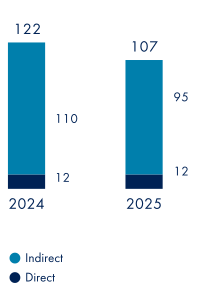
Our Energy investments supported 12,000 direct jobs in 2025, a level consistent with 2024. An estimated 25 percent of these positions were held by women. When factoring in indirect jobs, including those supported through the supply of electricity, we estimate that our investments in this sector supported a total of 107,000 jobs in 2025, compared to 122,000 in 2024, using the Joint Impact Model for our estimations. The decrease in the total number of jobs is primarily driven by energy projects reaching operational status. As a result, the construction‑related jobs previously reported for these projects are no longer included.
Sol de la Sierra
Largest renewable distributed generation project in Colombia
US$30 million debt | FMO | SDG 8, 13

Colombia’s renewable energy sector is rapidly accelerating: the country increased its solar capacity by 4 percent in 2025, to nearly 2,700 MW as part of a broader push toward distributed generation and grid modernization. FMO provided a US$30 million Green-labelled investment to help finance an innovative renewable energy solution being developed by Ayurá S.A.S. and Solenium S.A.S. The solution, Sol de la Sierra, is a portfolio of 40 mini solar farms across Colombia, each with 1 MW capacity. These distributed systems connect directly to local distribution networks, reducing dependency on distant thermoelectric and hydroelectric plants, minimizing transmission losses and stabilizing the grid. Each mini-farm provides clean power to approximately 1,000 households and creates local jobs while engaging with schools and farmers to support community development. As sole lender to the project, FMO is enabling Ayurá and Solenium, in partnership with Unergy, to scale Colombia’s first large distributed-generation solar portfolio. This financing marks the country’s largest investment in distributed-generation to date, showcasing a scalable model for democratizing clean energy access and advancing Colombia’s energy transition.
Energy and SDG 10
RI-labelled total committed portfolio in Energy (in € mln)

RI-labelled total new investments in Energy (in € mln)

The RI-labelled Energy committed portfolio amounted to €1.1 billion in 2025, remaining broadly consistent with 2024. The majority (70 percent) of this portfolio is invested in LDCs, with the largest exposures in Burkina Faso, Senegal, and Uganda. This reflects our contribution to reducing inequalities among countries by directing capital to markets that are underserved by the global financial system.
In 2025, RI-labelled total new investments amounted to €208 million, of which €147 million was directed to LDCs, representing more than half of all RI labelled new investments. These investments are often smaller in size, with longer lead times reflecting the complexity of operating in challenging markets.
One example is our €6 million investment in E.V. Assets Management which will support the shift to a green transportation system in Uganda by financing electric vehicle batteries and battery swapping stations infrastructure. We also saw an increase in new investments in support of inclusive growth and gender equality. In total, 30 percent of all Energy investments received an RI Label.
In addition to our investments, we also support women’s economic empowerment through technical assistance. One example is the Power Women Ukraine project, launched in partnership with Scatec, IFC, and Swedfund. This educational initiative trains and upskills cohorts of around 20 women for careers in the energy sector, enabling them to work in green energy enterprises in Ukraine, as the country faces a critical shortage of electro-technical specialists in the renewable energy sector due to the war. The program not only strengthens energy resilience but also advances gender equality in a traditionally male-dominated field. The first cohort completed the training in 2025, with the second cohort beginning in 2026.
Ilute Solar Limited
Special purpose vehicle for solar power project in Zambia
US$12 million debt | FMO, Access to Energy Fund | SDG 8, 10, 13

Located in Western Zambia, an LDC, Ilute is a 32 Megawatt-peak solar plant developed by Serengeti Energy and Kwama Energy. It is the first project-financed solar plant to sell electricity through the Southern African Power Pool (a regional electricity trading platform) under a market-based power purchase agreement (which allows prices to be set competitively rather than fixed) done in partnership with GreenCo Power Services Ltd. Instead of relying on government-backed contracts and guarantees, Ilute uses a merchant model selling electricity directly to the regional market. This approach encourages competitive pricing, attracts private investment and strengthens regional integration. This demonstrates how renewable energy can be financed without burdening government budgets, while strengthening Zambia’s energy transition. FMO acted as Mandated Lead Arranger for the US$26.5 million financing package, blending commercial, development, and concessional capital to de-risk the project and attract private investment. The innovative financing structure enabled participation from commercial lenders and catalytic funding from the Sustainable Energy Fund for Africa (SEFA), a facility managed by the African Development Bank that supports renewable energy projects on the continent. The investment includes EU funding from ElectriFI and demonstrates the EU’s Global Gateway approach through investments that enhance smart, clean, and secure connections in the digital, energy, and transport sectors.
Energy and SDG 13
Green-labelled total committed portfolio in Energy (in € mln)

Green-labelled total new investments in Energy (in € mln)

FMO’s Green-labelled committed Energy portfolio remained largely stable compared to 2024, amounting to €3.1 billion in 2025, with 77 percent in debt and 23 percent in private equity. Renewable energy utilities continue to drive portfolio performance. To support further sector development and address the challenge of intermittency, which occurs because renewable sources like solar and wind produce energy only when conditions allow, we are increasing our presence in transmission and distribution as well as energy storage solutions.
In 2025, 94 percent of our total new investments in Energy received a Green Label, amounting to €652 million, an increase of €123 million compared to 2024. This included a participation as a parallel lender in a syndicate led by IFC to finance what is expected to become the largest integrated solar and battery energy storage system (BESS) project in Africa to date—Abydos II. This 1,000 MW solar PV and 300 MW / 600MWh BESS project in Egypt will provide affordable, renewable, and reliable electricity by generating power at a cost well below the current average and by using the integrated BESS to store surplus energy from peak hours and supply it during evening demand.
Financed avoided GHG emissions (in ktCO2e)
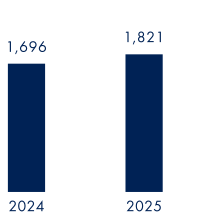
All Green-labelled new investments in the Energy portfolio were geared towards climate change mitigation. We estimate that the Energy portfolio resulted in financed avoided GHG emissions of 1,821 ktCO2e (2024: 1,696 ktCO2e).18 This represents an increase compared to last year, which can be explained by higher avoided emissions recorded for on-grid energy investments. Around three quarters of the avoided emissions can be attributed to on-grid renewable power projects and around one quarter to off-grid and other energy investments.
We are committed to phasing out fossil fuels in our direct investments and implementing additional restrictions for our indirect investments. We have set an absolute emission reduction target for our power generation portfolio of 50 percent by 2030. In 2025, the power generation target GHG emissions were 318 ktCO2e, a 49 percent reduction compared to the 2021 baseline. The reduction is due to an overall decrease of our outstanding exposure in operational fossil fuel plants, consistent with the commitments set out in the ‘FMO Combined Statement on Fossil Fuels’. For details, please refer to 'E1-4 Targets related to climate change mitigation and adaptation' in the 'Sustainability statement'.
Sustainable Asia Renewable Assets Pte. Ltd.
Greenfield renewable energy platform across Asia
US$50 million equity | FMO | SDG 13

Southeast Asia is one of the fastest-growing energy markets globally, projected to account for over a quarter of global energy demand growth by 2035. Yet nearly 80 percent of this demand has historically been met by fossil fuels. To expedite the clean energy transition, Sustainable Asia Renewable Assets (SARA) was launched as a new utility-scale renewable energy platform. Developed by SUSI Partners through SUSI Asia Energy Transition Fund (SAETF) in partnership with FMO and BII, SARA aims to build a 500 MW portfolio of greenfield renewable energy projects across Southeast Asia. The platform focuses on accelerating construction and operation of solar and wind projects while developing its own proprietary pipeline to create a scalable, independent renewable power company. FMO committed US$50 million to SARA through co-investment and top-up commitments into SAETF which have helped double the size of its Southeast Asia strategy, delivering significant positive climate impact in one of the world’s most carbon-intensive growth regions.
Key sector events and initiatives
EDFI Renewable Energy Transition (RET) Program
With our partners, we aim to accelerate the transition towards affordable, reliable, clean energy in underserved regions. FMO played an active role in setting up and shaping the EU-supported program EDFI Renewable Energy Transition (EDFI RET). The operationalization of EDFI RET provides us with an important instrument in our toolbox: this risk guarantee program allows us to lower project financing costs, enhance project viability, and reduce end-user electricity tariffs. In 2025, we signed our first EDFI RET transaction, supporting the Green Investment Partnership, a blended finance fund designed to unlock investments for green infrastructure in Asia by supporting marginally bankable projects.
Powering Progress Responsibly: Unpacking IFC Performance Standard 6 for Renewable Energy Projects
As part of our Technical Assistance Program, FMO partnered with the consultancy Nature Positive New Zealand to launch ‘Powering Progress Responsibly’, a unique training program focused on the International Finance Corporation’s (IFC) Performance Standard 6 (PS6): Biodiversity Conservation and Sustainable Management of Living Natural Resources. The program consists of self-paced online modules covering the core concepts of IFC PS6. In addition, FMO held three in-person workshops attended by more than 25 renewable energy developers and fund managers. These sessions highlighted practical applications of IFC PS6 through real-world case studies. The program equips participants with practical knowledge and tools to integrate biodiversity and ecosystem services considerations across the entire project lifecycle, from planning to operations and eventual decommissioning.
Financial Institutions
In 2025, financial institutions operating in emerging markets and developing economies demonstrated notable resilience against a backdrop of an unpredictable external environment. At the same time, structural transformation within the sector continued to accelerate. Rapid technological change, particularly the rise of fintech and artificial intelligence (AI), reshaped risk management, customer engagement, and operational processes. These trends created opportunities for efficiency gains and expanded access to finance for previously underserved segments, but also introduced new operational, cyber, and governance risks that require robust institutional capacity and oversight.
Foreign exchange risk was another key factor impacting the sector in 2025. Although the weaker US dollar in 2025 provided some relief compared to the sharp currency pressures experienced in 2022 and 2023, many banks and businesses still faced risks from borrowing in foreign currencies. As a result, demand for local-currency financing and stronger domestic financial markets remained high, reflecting a broader push to enhance financial system resilience and reduce vulnerability to external shocks.
These dynamics underscore the critical role of DFIs in providing long-term, countercyclical capital and supporting local-currency solutions to strengthen financial system resilience. Rapid technological change highlights the need to complement financing with technical assistance in areas such as digital transformation, risk management, and governance. Finally, persistent geopolitical and currency-related uncertainties reinforce the importance of mobilizing private capital and targeting underserved segments to foster inclusive and sustainable growth.
Overall sector performance
Total committed portfolio in FI (in € mln)


Total new investments in FI (in € mln)


FMO’s total committed FI portfolio amounted to €7.5 billion at the end of 2025, remaining largely stable despite the negative impact of the depreciated US dollar on the euro-denominated portfolio. Debt instruments accounted for 79 percent of the portfolio, while 17 percent was invested in equity. Universal banking represented approximately 70 percent of the total exposure, with the portfolio well diversified across the four regions where FMO operates.
New investment activity was particularly strong in Europe, Asia and the Middle East, and Latin America & the Caribbean in 2025. This performance was driven by several large transactions with long-standing customers, underscoring FMO’s commitment to deep, enduring partnerships. In addition, we actively leveraged collaborations with private and public third-party capital providers to mobilize additional funding alongside our own investments. By placing greater emphasis on partnerships, syndications, and blended finance structures, we were able to support a broader client base and facilitate larger transactions than would have been possible independently. Mobilized capital represented approximately 28 percent of total new investment volume contracted during the year.
In absolute terms, new investment activity was stronger than in the previous year. Reported investment volumes, however, were affected by the approximately 13 percent depreciation of the US dollar against the euro, given that the majority of the portfolio is USD denominated. Of the total new investments, €1.6 billion from FMO’s own balance sheet and €107 million was deployed through public funds. Debt products accounted for 98 percent, while equity investments represented 2 percent of the total.
These results demonstrate strong performance across our FI portfolio, not only in terms of volume but also impact. Through targeted investments alongside our customers and co-investors across nearly every continent, we expanded access to finance for underserved entrepreneurs, supported climate-focused lending, and helped strengthen local financial systems, helping businesses and communities access more reliable and affordable financing.
Contribution to FMO's strategic impact ambitions
Financial Institutions and SDG 8
Jobs supported (in thousands)
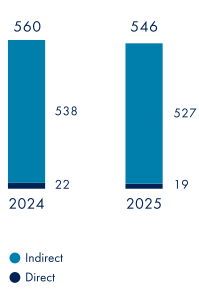
MSMEs form the backbone of emerging economies, providing the majority of jobs and significant added value, yet they often face considerable barriers to accessing finance. Through investments in financial institutions, we support MSMEs to grow and innovate, which helps to foster a productive and resilient private sector. In 2025, this contribution was reflected not only in new investment volumes, but also in the strengthened capacity of financial institutions to serve MSMEs in a sustainable way.
The number of direct jobs supported through our financing in financial institutions remained broadly stable in 2025, reaching 19,000 and staying close to the 22,000 reported in 2024. An estimated 42 percent of these positions were held by women. Using the Joint Impact Model, we also estimate that our financing supported an additional 527,000 indirect jobs, a level broadly comparable to 2024 (538,000). These indirect jobs were primarily driven by employment supported through our customers’ financing activities.
I&M Bank Rwanda
Universal bank in Rwanda
US$20 million debt | EC, MASSIF, FMO | SDG 8, 10

Rwanda’s MSMEs face a persistent challenge: access to credit is often tied to collateral that many enterprises cannot provide. To help address this constraint, FMO supported I&M Bank (Rwanda) Plc., the country’s oldest bank, through a NASIRA‑funded technical assistance program aimed at strengthening the bank’s internal capabilities across financial modelling, dashboarding, risk management, reporting, and data utilization. The improvements, completed in 2025, enabled the bank to significantly redesign its MSME lending strategy. With strengthened credit assessment tools, enhanced business intelligence, and more efficient internal processes, I&M Bank Rwanda introduced two uncollateralized lending products based on business performance rather than physical collateral, including cashflow‑based lending and invoice‑based lending. For MSMEs, these products provide more suitable and responsive financial solutions that reflect real business needs and cashflow cycles. This leads to improved access to the capital required to expand production, hire staff, and grow sustainably, while contributing to a more inclusive and competitive banking environment. By enhancing the bank’s capacity to reach and finance MSMEs more effectively, FMO is supporting stronger business productivity and contributing to long‑term economic resilience in Rwanda.
1st Valley Bank
Development bank in the Philippines
US$15 mln debt | FMO | SDG 8, 10

1st Valley Bank (1VB) is a development bank based in the Philippines, with a strong presence on the islands of Mindanao and Visayas. The bank primarily serves SMEs and farmers active in the production of coconut, corn, rice, and poultry, thereby providing financial services to support agricultural production and small-scale commercial and trade businesses. To support rural SMEs across the islands, FMO provided US$15 million in local currency (LCY) financing. Our 100 percent RI investment aims to increase financial inclusion in the Philippines, particularly towards underserved groups within the agricultural and commercial sector.
Financial Institutions and SDG 10
RI-labelled total committed portfolio in FI
(in € mln)

RI-labelled total new investments in FI
(in € mln)

The share of FMO’s FI’s portfolio supporting reducing inequalities (SDG 10) increased in 2025, with RI-labelled investments accounting for more than half of the total portfolio. The volume of new investments receiving an RI Label increased slightly in 2025, reaching €3.9 billion (2024: €3.5 billion).
FMO’s focus on inclusive finance promotes the broad sharing of economic growth, rather than allowing its benefits to accrue primarily to those already well served by the financial system. By intentionally directing capital to groups that have historically faced barriers to accessing finance, such as women, youth, MSMEs, and rural entrepreneurs, our investments aim to reduce inequalities of opportunity and strengthen inclusive economic participation.
In line with this approach, in 2025 we invested in Lendable, an MSME fintech credit fund that supports underserved micro and small businesses across emerging markets. Through the MASSIF fund, a public fund managed by FMO, Lendable received US$10 million to continue providing credit to socially impactful fintechs across Africa and Asia, while also expanding its reach to Latin America. Next to capital, we provided technical assistance, with a focus on strengthening risk management capabilities.
Beyond addressing inequalities within countries, FMO also seeks to reduce inequalities among countries by extending financing to markets underserved by the global financial system. These markets are often classed as higher-risk or affected by structural pricing mismatches. Reaching the least developed and fragile states and identifying investable opportunities in these contexts remains a challenge, even for DFIs. In 2025, we invested €217 million in LDCs, above the previous year’s level. Through continued market creation and ecosystem building efforts, we aim to help address the systemic barriers that constrain investment in these markets.
Coris Holding
Regional banking platform driving financial inclusion in West Africa
€10 million equity | FMO | SDG 8, 10

West Africa faces one of the lowest banking penetration rates globally, with less than 30 percent of the population in many of its markets having a bank account. Expanding access to finance is crucial for supporting entrepreneurship, job creation, and inclusive growth. Coris Holding, the second-largest banking group in the West African Economic and Monetary Union, operates in 11 countries and serves over one million customers through a network focused on SME financing. Founded in 2008, Coris has built a strong regional footprint and a customer-centric model that prioritizes tailored financial solutions for individuals and businesses. To support Coris’ growth and regional expansion, FMO co-invested €10 million alongside Mediterrania Capital Partners (MCP) and three other European DFIs (BII, BIO, IFU) in a €102 million transaction. This investment is fully RI-labelled, with 83 percent of Coris’ balance sheet exposed to LDCs. Beyond capital, FMO and its partners are strengthening governance and ESG standards through a comprehensive Environmental and Social Action Plan (ESAP) and Corporate Governance Action Plan (CGAP), reinforcing the banking group’s role as a catalyst for financial inclusion across frontier markets.
Banco BBVA Perú
Universal banking institution in Peru
US$75 million debt | FMO | SDG 10

MSMEs in Peru are a cornerstone of the economy, yet women-owned businesses face persistent barriers to accessing finance. Strengthening this segment is critical for inclusive growth and gender equality. Banco BBVA Perú, the country’s second-largest bank with over nine million clients, is addressing this challenge through a landmark social bond aligned with ICMA’s Social Bond Principles. The US$200 million bond, arranged by IDB Invest, is fully dedicated to financing women-owned micro and small enterprises, enabling tailored credit solutions that foster resilience and economic empowerment. FMO invested US$75 million in Series B of the bond, alongside IDB and COFIDE, marking a significant milestone in Latin America’s sustainable finance landscape. This transaction carries a full RI Label and strengthens Peru’s social bond market, setting a precedent for thematic instruments that drive gender inclusion. FMO is also working with BBVA to integrate enhanced environmental and social risk management measures.
ASA International
Microfinance institution active in Africa and Asia
US$15 million debt | MASSIF | SDG 8, 10

ASA International (ASAI) is one of the world’s largest international microfinance institutions dedicated to serving low-income entrepreneurs, most of whom are women. Headquartered in Dhaka and Amsterdam and operating through 13 countries across Africa and Asia, ASAI provides small, socially responsible loans to underrepresented populations who lack access to traditional financial services. FMO’s US$1 5million facility, which was labeled 75 percent RI, supports on-lending to female microentrepreneurs while also strengthening ASAI’s digital transformation to make financial services more accessible for end clients. The transaction reinforces FMO’s commitment to gender inclusion and financial empowerment, while also marking the renewal of a partnership with a globally impactful Dutch-based institution.
Financial Institutions and SDG 13
Green-labelled total committed portfolio in FI
(in € mln)

Green-labelled total new investments in FI
(in € mln)

Despite the scaling back of climate policies in some parts of the world, FMO maintained a solid Green-labelled investment performance in 2025, with 23 percent of the FI portfolio contributing to SDG 13 objectives. Financial institutions, particularly those in Europe and Central Asia, the Middle East and North Africa, and Latin America & the Caribbean, continued to demonstrate strong commitment to climate mitigation and adaption within their portfolios, supporting national green transition agendas.
Total Green-labelled new investments amounted to €689 million in 2025, an increase compared to the €564 million invested in 2024. A key highlight was FMO’s US$75 million senior loan facility to DAVR Bank, a mid‑sized bank in Uzbekistan which focuses on micro, SME, and retail customers. The 100 percent Green and RI-labeled transaction was used fully to finance finance these customers' sub‑loans (all of which were Green projects). FMO supported DAVR through a 2024 Green Diagnostic study that delivered a clear roadmap for developing and implementing its green finance strategy, helping the bank expand green products and strengthen its position in the local market.
Vietnam Maritime Commercial Joint Stock Bank (MSB)
Blended finance facility driving green and inclusive growth
US$80 million debt | FMO, DFCD | SDG 8, 10, 13

Rural and women-led businesses in Vietnam often lack access to long-term finance for climate-smart investments. Vietnam Maritime Commercial Joint Stock Bank (MSB) is addressing this gap through a landmark blended finance facility that combines concessional capital from the Dutch Fund for Climate and Development (DFCD) with funding from FMO. The US$80 million facility will enable MSB to expand lending to SMEs, micro-SMEs, and women-led enterprises in rural, sustainable, and agricultural sectors, accelerating Vietnam’s climate resilience and inclusive growth. FMO provided long-tenor financing via DFCD’s Origination Facility, supporting MSB’s entry into underserved climate-smart segments. This partnership strengthens Vietnam’s green finance ecosystem and aligns with the EU’s Global Gateway strategy, fostering sustainable economic development and climate adaptation in one of Southeast Asia’s most dynamic emerging markets.
Banco Bolivariano
Universal bank in Ecuador
US$20 million debt | FMO | SDG 13

FMO supported the launch of Ecuador’s first ever Biodiversity Bond through a US$20 million co-investment in Banco Bolivariano, a longstanding locally-owned universal bank in Ecuador with a 45+ year track record. With a strong regional presence in the coastal region, Banco Bolivariano has become a key financier to Ecuador’s aquaculture sector. The US$120 million Biodiversity Bond, issued in 2025, will enable the bank to further grow its green and climate finance portfolio across sectors such as sustainable agriculture, the circular economy, forestry, and ecotourism. By deploying a biodiversity linked structure through a systemically important financial institution, this investment fosters private sector engagement in nature-positive financing and strengthens conservation and ecosystem protection efforts in Ecuador.
Key sector events and initiatives
Future of Finance
Continuing our drive for increased engagement across the financial sector, we hosted the seventh edition of FMO’s flagship event, The Future of Finance, in Rotterdam, the Netherlands, over two days in September. The event brought together more than 500 financial leaders from over 60 countries. Under the theme, ‘Turn the Tide’, the conference served as a call to action for financial institutions to lead with intention in an increasingly uncertain world. Keynote speakers and panelists explored how the sector can drive meaningful change, ranging from rethinking economic systems and empowering communities to designing inclusive financial services and navigating transformative technologies.
Nasira+
In 2025, FMO signed a new EFSD+ guarantee agreement with the European Commission for up to €264.5 million titled ‘Nasira+: A New Chance Guaranteed for Underserved Entrepreneurs and Green Financing’. MASSIF also committed up to €29 million to the program. This new Nasira+ guarantee program, aligned with the EU’s Global Gateway investment agenda, is designed to bridge the financing gap for entrepreneurs who are typically excluded from or underbanked by formal financial systems, including youth, women, migrant entrepreneurs, and agricultural and rural MSMEs. In addition, the program will support green investment opportunities. Nasira+ is expected to channel up to €1 billion in investment. The new program will expand into additional countries in Asia and Latin America & the Caribbean, while continuing its reach in Africa and the European Neighborhood, including Türkiye.
Nasira+ is complemented by a €17.1 million technical assistance facility, allowing FMO to offer both pre- and post-investment capacity-building support to customers and prospective partners. This integrated approach strengthens financial institutions’ ability to serve underserved segments responsibly and sustainably.
Sustainable Microfinance in Cambodia
The rapid expansion of microfinance institutions (MFIs) in Cambodia has supported economic development for low‑income individuals and microenterprises, but it has also contributed to rising borrower indebtedness. In 2022, at FMO’s request, the UN Resident Coordinator initiated a stakeholder engagement process to promote a more sustainable microfinance sector that protects borrower rights. A key outcome is the Debt Counselling and Mediation Working Group, supported by the National Bank of Cambodia, in which FMO participates. The group aims to strengthen local dispute‑resolution capacity for microfinance cases. As part of this effort, FMO has partnered with Oxfam Cambodia to enhance the National Alternative Dispute Resolution mechanism under the Ministry of Justice by building the skills of mediators who often lack sufficient knowledge of financing regulations and practices.
Private equity funds and venture capital
This section covers our investments in private equity funds and venture capital. Our direct private equity investments are reflected in the ‘Portfolio composition & performance drivers’ section, as well as in the sector sections on Agribusiness, Food & Forestry, Energy, and Financial Institutions presented earlier in this chapter.
Amid heightened macroeconomic uncertainty, private equity fundraising in our markets remained challenging throughout 2025. In response, FMO adopted a more deliberate investment approach, while liquidity concerns continued to shape the priorities of limited partners. At the same time, we observed stronger collaboration among DFIs and financing partners, alongside a promising rise in interest from local institutional investors, marking an important step toward mobilizing domestic capital.
True to our conviction of investing across economic cycles, we continued to back private equity funds as a cornerstone of our contribution to SDG 8, driving job creation and inclusive economic growth. Through dedicated gender and climate frameworks, tailored technical assistance, and ESG value creation, FMO remains a value-adding investor, committed to building sustainable businesses and accelerating the transition to resilient economies.
Following the sharp contraction in global venture capital markets since 2022, driven by geopolitical tensions and rising interest rates, markets started showing early signs of recovery in 2025. However, performance varied by region, sector, and stage of company development.
Despite these challenges, we remained committed to supporting early-stage innovators in Africa and Asia through the FMO Ventures Program. We invest indirectly through our commitments to venture capital funds and selectively invest directly in companies driving impact through fintech, clean energy, and agri-tech solutions. These investments focus on businesses aligned with our strategic sectors and combine scalable innovation with inclusive and sustainable economic growth.
Supported by the European Commission-backed Ventures Technical Assistance Program, we delivered an FMO Venture Capital ESG MasterClass, bringing together venture capital, ESG, and sector teams to share ESG best practices and strengthen impact measurement.
Market creation
FMO’s market creation efforts aim to unlock opportunities in underserved and frontier markets by addressing the barriers that prevent impactful businesses from becoming investment‑ready. In line with our 2030 Strategy, we work closely with partners to build a strong pipeline of bankable, high‑impact projects, mobilizing capital, strengthening ecosystems, and supporting early‑stage ventures. Over the past year, these initiatives have increasingly translated into tangible results, demonstrating how targeted market creation activities can mobilize private investment and contribute to more inclusive, resilient economies.
Key achievements
Through the African Resilience Investment Accelerator (ARIA), a partnership with BII and, more recently, Proparco, we support the growth of select frontier markets across Africa and have unlocked €137 million in DFI investment since its launch in 2021. In addition, the Commercial Agriculture for Smallholders and Agri-business (CASA) program, a partnership with BII and FCDO, has mobilized more than €15 million in green and inclusive agriculture investments, increasing incomes of over 150,000 smallholder farmers and strengthening their climate resilience.
In addition to mobilizing capital into investable businesses, FMO strengthens earlier stages of the pipeline. Through the Market Creation program, we also supported two Africa-based clean energy-focused venture builders: Delta40 and Persistent, which help entrepreneurs build new businesses.
Continuing our focus on early-stage African ventures, the third season of the Endeavor-FMO Agri Tech Accelerator Program launched in 2025 with a new cohort. The program provides tailored growth support to early-stage African agri-tech ventures over a 12-month period, helping promising companies scale toward investment readiness.
In 2025, FMO significantly expanded the market creation funding it manages. Following an initial contribution of €22 million from the Dutch Ministry of Foreign Affairs in 2023, we mobilized a further €75 million from the European Commission and the UK Government’s Foreign, Commonwealth and Development Office. Together, this €97 million Market Creation Platform brings five programs under one umbrella, strengthens collaboration with Dutch and European partners, and supports the development of a strong pipeline of high-impact, bankable opportunities.
Partnerships and stakeholder engagement
FMO continued to deepen partnerships with public and private stakeholders to scale market creation efforts. In September 2025, FMO hosted a Market Creation Platform milestone event during its Future of Finance conference together with the Dutch Ministry of Foreign Affairs. The event brought together key partners and marked the formalization of the platform’s governance through the establishment of a Donor Forum and an Advisory Forum. The Donor Forum coordinates and advocates for the strategic direction of the platform’s market creation activities and programming among donors. The Advisory Forum serves as a community of practice, bringing together market creation experts and key FMO partners to provide guidance on market creation topics. Together, these forums foster meaningful dialogue with external stakeholders, further strengthening the Market Creation Platform’s relevance and impact.
FMO’s market creation activities also align with the European Union’s Global Gateway investment priorities, particularly in renewable energy, the digital economy, infrastructure, and agriculture value chains. In 2025, under the Invest in Young Business in Africa (IYBA) Team Europe Initiative, we began implementing two market creation programs supporting young and growing businesses in these sectors. These companies form a potential pipeline for European Fund for Sustainable Development Plus (EFSD+) guarantee programs, including several managed by FMO such as Nasira+, DFCD-Aya, and EDFI RET. Nasira+ expands access to finance for underserved MSMEs and green entrepreneurs through risk‑sharing with financial intermediaries, while DFCD-Aya supports the de‑risking of bankable climate‑resilient investments in sustainable agriculture and land‑use value chains. EDFI RET complements this by accelerating renewable energy markets through coordinated EDFI risk‑sharing for direct and indirect debt and equity investments. Together, these programs illustrate how market creation and blended finance can jointly mobilize private investment at scale.
European alignment
These market creation efforts show how FMO uses grants and blended finance to build investable pipelines, unlock private capital, and support entrepreneurs access finance, grow their activities, thereby contributing to more inclusive and resilient economies.
For further information on how FMO manages the public funds it receives and administers on behalf of the Dutch government, the UK government, and other partners, and how these arrangements affect FMO’s financial position and performance, please refer to the ‘Services in relation to government and public funding’ section of the Consolidated Financial Statements.